
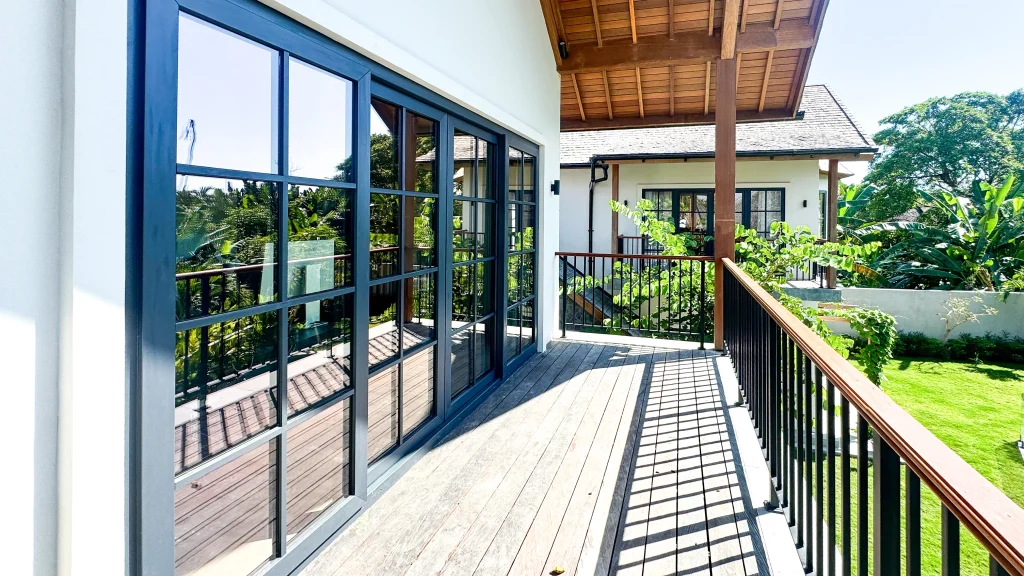
In modern tropical cities like Jakarta, Surabaya and Bali, true comfort means more than staying cool — it means escaping noise, reducing heat, and creating a calm indoor sanctuary.
At DESCH, we design high-performance German window systems that dramatically reduce outside noise, block heat, and enhance everyday comfort, turning your home into a quieter, cooler, and more refined living environment.
Modern, high quality Double Glazed Windows play a key role in creating Tropical Comfort Homes.
📢 Noise Control Comes First in Urban Tropical Living
Traffic, motorcycles, construction, and dense neighborhoods create constant background noise that impacts sleep quality, stress levels, and overall wellbeing.
Perceived noise ireduction:
Importand: “Perceived loudness is logarithmic — every 10 dB reduction is experienced by the human ear as roughly cutting noise in half – This is based on human hearing perception, not linear sound energy.”
High-Performance Acoustic Windows for Quiet Homes
Standard windows reduce noise only marginally. Our advanced UPVC and aluminium systems can reduce noise by 30–45+ dB, with our highest specifications capable of cutting outside noise by over 40 dB.
Our Soundproof Windows range includes:
Aluminium vs. UPVC Windows:
We offer both, UPVC and Aluminium, while UPVC frames naturally absorb vibration and prevent sound transmission better, Aluminium in combination with the right glazing can also deliver outstanding result.
Noise reduction results can vary from home to home. The final performance depends on wall materials, ceiling structure, installation quality, and other paths where sound may enter — not only the windows.
☀️ Sunlight and Daily Life in Tropical Homes
Sunlight is a natural and powerful element of our environment. Beyond visible light, the sun emits ultraviolet (UV) and infrared (IR) radiation, both of which reach our homes every day.
In Indonesia’s year-round sunny climate, solar radiation influences:
While sunlight is essential, uncontrolled exposure can quickly turn a comfortable home into an overheated space.
UV, IR, and Visible Light – What Enters Your Home
Sunlight consists of different wavelengths, each with distinct effects:
High-quality glazing is designed to allow beneficial light while reducing unwanted heat and harmful radiation.
The Sun’s Impact on Health and Well-Being
Sunlight has a strong influence on the human body.
Benefits of Natural Daylight:
Challenges in Indonesian Homes:
A Comfort Home allows residents to enjoy daylight without exposing themselves or their interiors to unnecessary risks.
The Sun and Architecture in Indonesia
Architecture adapts living spaces to local climate conditions. In Indonesia, managing sunlight is not optional—it is essential.
We Want Light, But We Need Control.
Modern homes use:
These design choices bring daylight deep into interiors, visually enlarge spaces, and improve living quality. However, without proper glazing and shading, they also increase heat gain.
Photodegradation: Protecting Interiors and Materials
Continuous sun exposure affects buildings and interiors:
High-quality modern window systems with advanced surface treatments and UV protection significantly reduce these effects, helping interiors stay visually appealing for years.
Climate Control and Energy Efficiency in Comfort Homes
Architecture adapts living spaces to local climate conditions. In Indonesia, managing sunlight is not optional—it is essential.
In Jakarta, Bali, and other tropical regions, air conditioning is a necessity—but its efficiency depends largely on the windows.
Poorly insulated glazing allows constant heat entry, forcing air conditioners to:
How Advanced Windows Improve Climate Control:
These measures will reduce the cooling load of a building substantially.
Smaller AC Systems, Lower Costs, More Comfort
When solar heat gain is controlled effectively:
In many residential and hospitality projects in Indonesia, optimized window systems allow smaller AC units to deliver better comfort than oversized systems in poorly insulated buildings.
This leads to:
Smart Investment With Long-Term Benefits
Although high-performance windows require a higher initial investment, the long-term advantages are clear:
For homes, apartments, hotels, and villas in Indonesia, windows are not just an architectural element—they are a core part of climate control strategy.
Window Shading Systems for Tropical Comfort
Shading systems add another layer of control.
External Shading:
Internal Shading:
When combined with automation, shading systems adjust automatically to sun position, further reducing heat gain and improving comfort without manual effort.
Finding the Right Balance
Sunlight is neither good nor bad—it must be managed correctly.
A well-designed Tropical Comfort Home:
With modern window systems, advanced glazing, and intelligent shading, homes in Jakarta, Bali, and across Indonesia can fully benefit from the sun—without suffering from its drawbacks.
Comfort, Efficiency, and Long-Term Value:
A well-designed Comfort Home delivers more than visual appeal and pleasant daylight. It creates a calmer, cooler, and more comfortable indoor environment by controlling both heat and noise through high-performance windows, advanced acoustic glazing, solar-protective glass, and effective shading solutions.
By reducing solar heat gain, indoor temperatures remain more stable, allowing for smaller air-conditioning systems, lower upfront investment, and reduced monthly electricity costs. At the same time, acoustic window systems significantly cut outside noise, improving privacy, sleep quality, concentration, and overall well-being.
Over time, these performance benefits generate a strong return on investment (ROI)—not only through lower energy consumption, but also through greater interior durability, higher living comfort, and increased property value.
In tropical environments such as Jakarta, Bali, and across Indonesia, smart window, acoustic, and climate-control solutions are not optional upgrades—they are a strategic investment in comfort, efficiency, and long-term performance.
Plan your project with us.
Get professional advice on quality windows, soundproofing, glazing options, and other helpful information for your project in Jakarta, Bali and all other locations in Indonesia.